 English
  简体中文
简体中文 How's the welding quality of the welding robot?
With the rapid development of technology, automation has become a key term in modern manufacturing. Especially in the welding field, the use of welding robots not only greatly improves production efficiency but also enhances welding quality, providing companies with unprecedented competitive advantages. This article dives into the benefits of welding robots and hints at how they are reshaping the future of manufacturing.
Boosting Production Efficiency
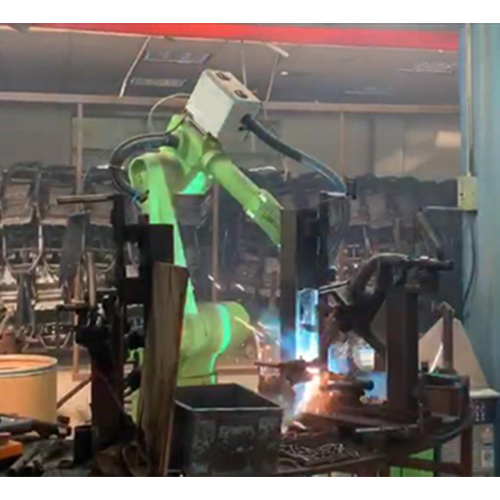
First, welding robots significantly increase production efficiency. These robots can work continuously without breaks, and compared to human, they work faster and more consistently. This highly efficient workflow means production cycles are greatly shortened, allowing companies to complete more orders in less time and respond quickly to market demands.
Ensuring Welding Quality
Ensuring welding quality is another obvious advantage of welding robots. The precision and consistency of robotic welding far exceed manual welding, ensuring that every weld meets high-quality standards. This is especially important for industries with strict requirements, such as aerospace and automotive manufacturing, where welding quality directly affects the safety and reliability of the final products.
Improving Work Environment
Smoke, harmful gases, and high temperatures generated during welding can pose health risks. Using welding robots can free human workers from these harsh working conditions, greatly improving the work environment and reducing the incidence of occupational diseases. At the same time, this also helps lower health and safety risks for companies and reduces costs associated with workplace accidents.
Flexibility and Adaptability
With technological advancements, modern welding robots have improved not just in performance but also in flexibility and adaptability. Through programming, they can easily handle different welding tasks and changing production needs, and even switch quickly between multiple product lines, providing companies with great production flexibility.
Cost Reduction
Although the initial investment in welding robots is relatively high, in the long run, they can help companies save a lot of costs. The robots' high efficiency and quality output reduce material waste and the need for rework. Moreover, as robots increase production efficiency, long-term labor costs are significantly lowered.
Conclusion
Welding robots are becoming an indispensable part of modern manufacturing. By improving production efficiency, ensuring welding quality, enhancing the work environment, increasing flexibility and adaptability, and reducing costs, they bring huge value to companies. As technology continues to advance and applications expand, welding robots will play an increasingly important role in reshaping the future of manufacturing.