 English
  简体中文
简体中文 Knowledge about degrees of freedom in industrial robots
Today, with automated manufacturing, smart factories, and flexible production lines becoming mainstream, industrial robots have become the "ace weapon" for companies to boost production efficiency and manufacturing precision. When choosing an industrial robot, the term "degree of freedom" often comes up, but many users new to industrial automation are still confused about what it means. So, what exactly is the degree of freedom for an industrial robot? Is more freedom always better? This article from Erbidi Robot will break it down for you in detail. We’ll dive into the definition, impact on performance, typical applications, and answer the key question: is having more degrees of freedom always better?
What is the degree of freedom for an industrial robot?
In industrial robots, degrees of freedom usually refer to the number of independent directions in which the robot can move—that is, the number of axes along which the robot’s end effector (such as a welding gun or gripper) can independently move or rotate in 3D space.
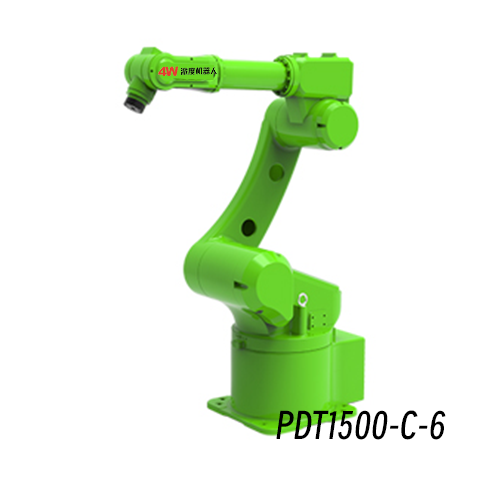
Common six-axis robots (like PDT1500-C-6, PDT1850-D-6, and similar models) have 3 translational and 3 rotational degrees of freedom,
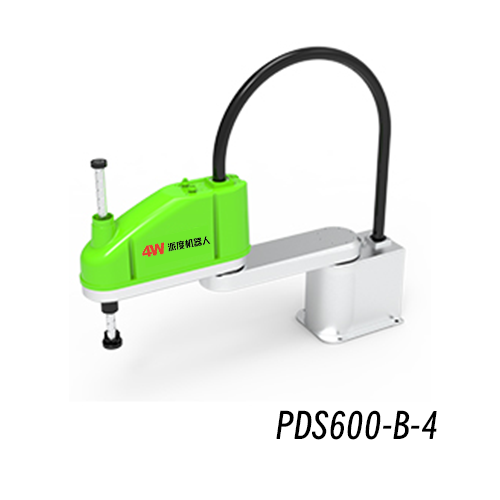
enabling flexible operation across the entire workspace. Four-axis SCARA robots, on the other hand, are more focused on high-speed, precise operations in the horizontal plane. Three-degree-of-freedom Delta robots also shine in lightweight sorting tasks.
Key tip: More degrees of freedom don’t necessarily mean better—they need to match the specific task scenario.
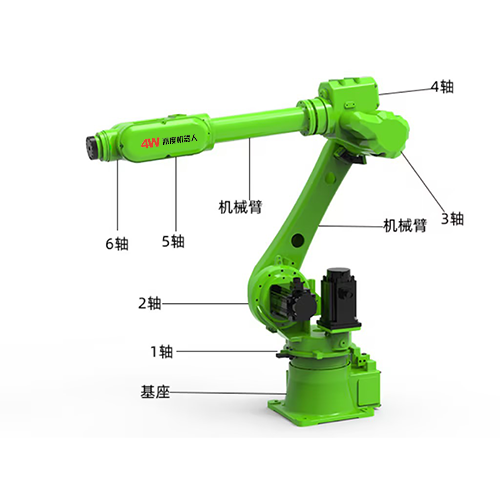
How degrees of freedom affect robot performance
1. Task Flexibility
Low degrees of freedom (1–3 axes): Suitable for simple path tasks like handling and sorting, with simpler control logic and lower maintenance costs.
High degrees of freedom (4–6 axes): Can handle more complex paths and spatial posture adjustments, such as car painting or precision welding.
2. Control Accuracy & Structural Rigidity
More degrees of freedom mean more moving joints, which demand higher requirements for control algorithms and servo systems. Otherwise, cumulative errors and dynamic stability issues can affect task accuracy.
3. Cost & System Complexity
Each added degree of freedom usually increases costs by 15%–30%. With a more complex system, programming and maintenance become more challenging, requiring higher skill levels from operators.
Full Breakdown of Degree of Freedom Applications
Six-axis robots: Multipurpose players in car manufacturing
Thanks to excellent flexibility and spatial coverage, six-axis robots are widely used in welding, glue spraying, and assembly in the automotive industry. For instance, when welding car body structures, their multi-angle operation significantly boosts welding quality and efficiency.
SCARA robots: Precision specialists in electronics manufacturing
Four-axis SCARA robots excel in inserting electronic components and chip mounting. With high repeatability and speed in the horizontal plane, they are the go-to choice for small, precise manufacturing.
Delta robots: High-efficiency tools in food packaging
Three-degree-of-freedom Delta robots, using a parallel structure, stand out in food and pharmaceutical packaging thanks to their super-fast movements. Even with low degrees of freedom, they have a clear advantage in high-frequency tasks.
Is More Degrees of Freedom Always Better? Choosing Carefully Is Key
Although higher degrees of freedom give robots greater flexibility, they also come with a range of potential issues:
Redundant functionality: If used only for simple pick-and-place tasks, deploying a six- or seven-axis robot would be a waste of resources.
Increased control complexity: A seven-axis robot can 'mimic human movements' to avoid obstacles, but its inverse kinematics calculations become more complicated.
Higher maintenance costs: Each additional joint increases the potential failure rate, meaning higher operation and maintenance costs and more downtime risks.
Conclusion:
More degrees of freedom aren’t always better; the key is matching the robot to the task.
Summary: Choose the Right Degrees of Freedom to Unlock the Robot’s Full Potential
The degrees of freedom of an industrial robot determine its range of motion, flexibility, and ability to handle complex environments. Properly configuring the degrees of freedom not only optimizes production but also controls costs and boosts production line stability.
If you’re selecting robots for factory automation upgrades, remember: it’s not about having the most degrees of freedom, but having the right degrees that best match the task for maximum efficiency!